

ANTALYA, Turkey — On the afternoon of November 11, local time, the High-Level Forum on South-South Cooperation for Climate Action, held as part of the “China Pavilion” at the 31st Conference of the Parties (COP 31) to the United Nations Framework Convention on Climate Change (UNFCCC), took place in Antalya, Turkey. Themed “Joining Hands for Climate Action: Building a Low-Carbon and Resilient Global South”, the forum unveiled a suite of cooperation deliverables including the “China South-South Climate Action Academy”, the “Global South Climate Action Leaders Program” (SCALE), and “MAZU”, China’s intelligent meteorological early warning solution.
Li Gao, Head of the Chinese Delegation to COP31, Vice Minister of Ecology and Environment of China attended the forum and presented China’s achievements in South-South climate cooperation on climate change. Chen Zhenlin, Administrator of the China Meteorological Administration, unveiled the “MAZU” smart early warning initiative, while Xia Yingxian, Director General of Department of Climate Change at the Ministry of Ecology and Environment of China, chaired the ministerial session.
Speakers included Selwin Hart, Special Adviser to the United Nations Secretary-General on Climate Action and Assistant Secretary-General; Abubakar Ben Mahmoud, Minister of Environment and Tourism of Comoros; Ambassador Berhanu Tsegaye, State Minister of Foreign Affairs of Ethiopia; Zou Jiayi, President and Chair of the Board of Directors of the Asian Infrastructure Investment Bank (AIIB); Gilbert Siame, Minister of Green Economy and Environment of Zambia; Zhao Yingmin, President of the BRI International Green Development Coalition; and a representative of the Minister of Environment of Nigeria. Representatives from governments, international organizations, financial institutions, enterprises and think tanks across worldwide attended the forum.
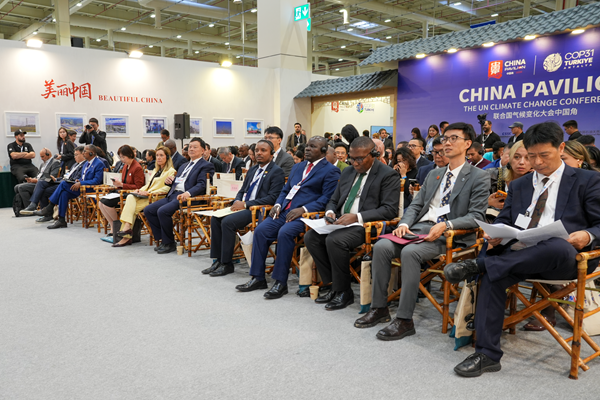
[Event venue at COP31 “China Pavilion”. Photo by Li Ming.]
ACHIEVEMENTS DELIVERED, SOLUTIONS SHARED
During the outcomes presentation session, Vice Minister Li outlined the latest progress in China’s South-South climate cooperation on climate change. He noted that China has signed 60 memoranda of understanding with 46 developing nations, establishing low-carbon demonstration zones tailored to partners’ actual needs. Flagship projects such as “Africa Light Belt” “Early Warning Systems” and “Clean Stoves” have been successfully implemented. Over 300 capacity-building programs have trained more than 10,000 officials and technical personnel from over 120 developing countries in climate change.
At the forum, Li Gao announced two new initiatives. The first is the “China South-South Academy on Climate Change”, which draws on China’s practical experience in addressing climate change and focuses on key areas such as mitigation, adaptation, carbon market mechanisms, and climate finance to build a multi-level, broad-based capacity-building system for government officials and industry experts from developing countries. Second is the “Global South Climate Action Leaders Program” (SCALE), jointly launched with the UNFCCC Secretariat and multiple partners. Focusing on climate implementation and action, SCALE aims to cultivate a new generation of local leaders in the Global South who can engage with international climate governance and drive the implementation of their countries’ climate policies. The first phase of the program is scheduled to launch in 2027.
Confirmed partners joining the initiative’s network include the United Nations Environment Programme (UNEP), United Nations Educational, Scientific and Cultural Organization (UNESCO), the World Meteorological Organization (WMO), the International Renewable Energy Agency (IRENA), the Asian Infrastructure Investment Bank(AIIB), the Global Energy Interconnection Development and Cooperation Organization, as well as corporate partners BYD, Xiaomi, Tencent, and Lenovo.
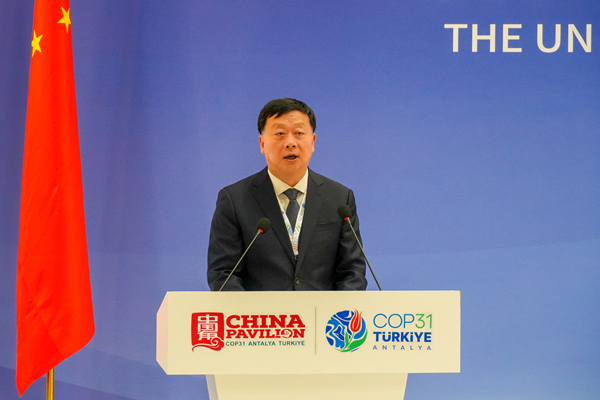
[Vice Minister Li Gao Outlines the Latest Progress in China’s South-South Cooperation on Climate Change. Photo by Li Ming.]
Director General Chen unveiled China’s intelligent meteorological early warning solution, “MAZU”. The acronym stands for Multi-hazard, Alert, Zero-gap, and Universal, aligning closely with the core values of the UN’s Early Warnings for All initiative. Based on a cloud-based early warning operational system, the solution provides one-stop early warning services globally through a menu-based, customized service model.
To date, the “Mazu” system has already taken root in Pakistan and Ethiopia. In Pakistan, the customized severe convection risk product achieved an 83% hit rate with lead times exceeding six hours. In Ethiopia, the platform integrates four specialized modules covering agriculture, watersheds, marine environments, and aviation. Customized collaborations are advancing in the Solomon Islands, Sri Lanka, Mongolia, Jordan, Djibouti, and other nations, embodying a “one-country, one-policy” approach. This July, China announced plans to deploy the MAZU solution across 30 countries, safeguarding communities and ensuring safety worldwide.
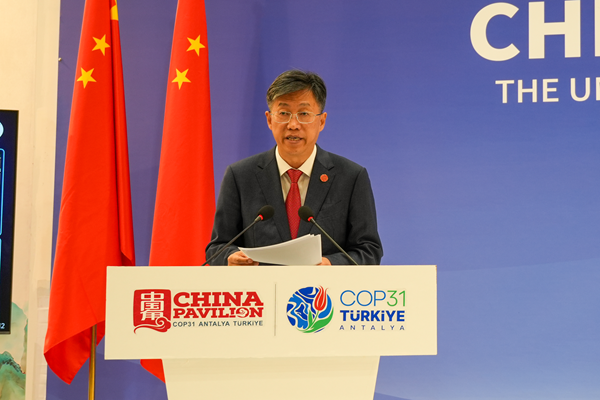
[Director General Chen Zhenlin unveiling the MAZU intelligent early warning solution. Photo by Li Ming.]
SHARED DESTINY, RESONANT VISIONS
Currently, the focus of global climate governance is shifting from negotiating rules to implementing actions, and green, low-carbon development has become an irreversible trend of our time. The Global South, bearing the brunt of climate impacts, shares a common mission to pursue green, low-carbon, and resilient growth. Delegates shared their practices and aspirations around this critical theme.
Selwin Hart highlighted that global warming is approaching and temporarily breaching the 1.5°C threshold, while Africa receives merely 2% of global clean energy investments, underscoring urgent dual challenges of climate and development. He praised green development cooperation under the Belt and Road Initiative and called for heightened ambition and accelerated action to tackle the climate crisis.
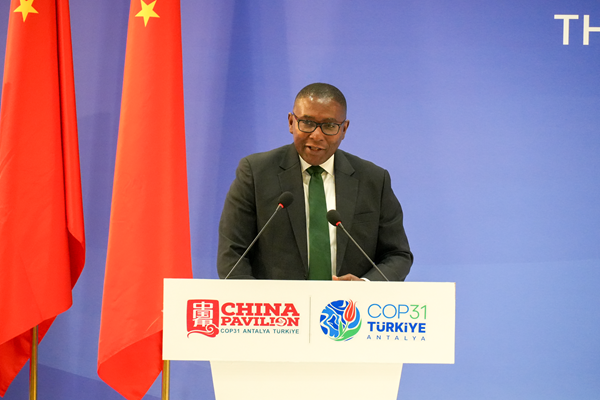
[Selwin Hart, Special Adviser to the United Nations Secretary-General on Climate Action and Assistant Secretary-General, delivers remarks at the forum. Photo by Li Ming.]
Abubakar Ben Mahmoud, Minister of Environment and Tourism of Comoros, stated that 94% of the country’s electricity comes from thermal power, while its clean cooking access stands at only 0.5%, with a target of raising it to 30% by 2030. He said the Comoros has signed a memorandum of understanding with China on cooperation in power and solar energy, and looks forward to deepening green energy cooperation with China.
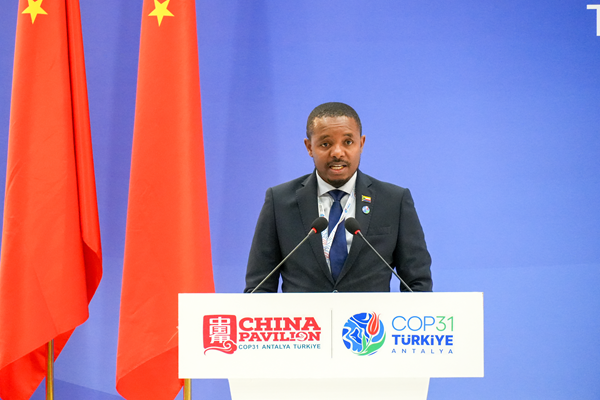
[Abubakar Ben Mahmoud, Minister of Environment and Tourism of Comoros, delivers remarks at the forum. Photo by Li Ming.]
Ambassador Berhanu Tsegaye, State Minister of Foreign Affairs of Ethiopia, reviewed the friendly relations between China and Ethiopia since the establishment of diplomatic ties in 1970, particularly the practical cooperation that has taken place since the two countries elevated their relationship to an “all-weather strategic partnership” in 2023. He also introduced the “Green Legacy” afforestation program and the goal of providing electricity to all citizens, and expressed gratitude for China’s support in the field of green development.
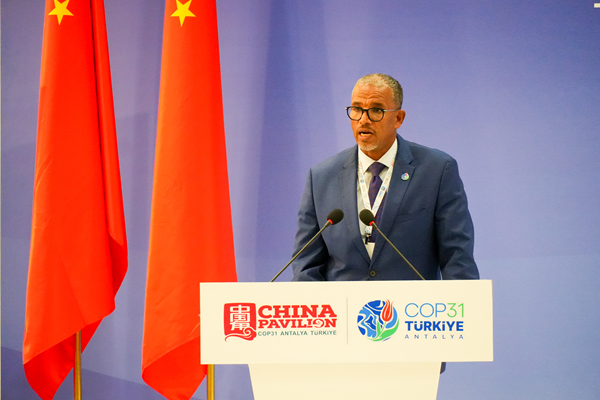
[Ambassador Berhanu Tsegaye, State Minister of Foreign Affairs of Ethiopia, delivers remarks at the forum. Photo by Li Ming.]
Zou Jiayi, President and Chair of the Board of Directors of the Asian Infrastructure Investment Bank (AIIB), explained that since 2023, the AIIB has been conducting Paris Agreement consistency assessments for all new projects. Currently, climate finance accounts for 71% of total financing, with 27% allocated to climate adaptation. By 2030, the financing volume is projected to reach approximately $20 billion. She noted that the AIIB signed a memorandum of understanding with China that day and expressed its willingness to deepen cooperation on climate finance with all parties.
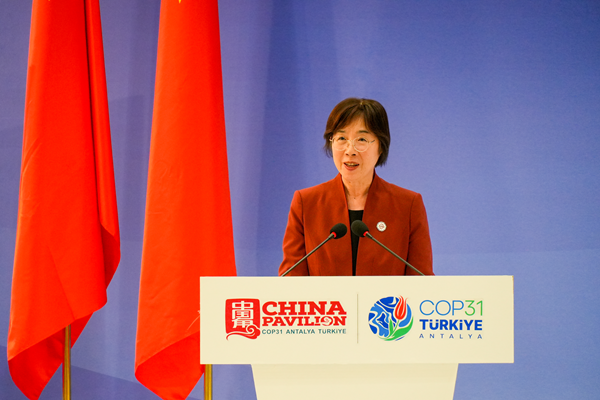
[Zou Jiayi, President and Chair of the Board of Directors of the Asian Infrastructure Investment Bank, delivers remarks at the forum. Photo by Li Ming.]
Gilbert Siame, Minister of Green Economy and Environment of Zambia, shared Zambia’s experience in electrifying all government-procured vehicles and building a carbon trading market. He underscored the important contribution of Chinese firms to Zambia’s green transition: solar power accounts for roughly 25% of the country’s energy mix, with Chinese investors leading the sector. He said Zambia will soon sign the MAZU early warning cooperation deal with China, stating that “Zambia opens its doors wide for cooperation”.
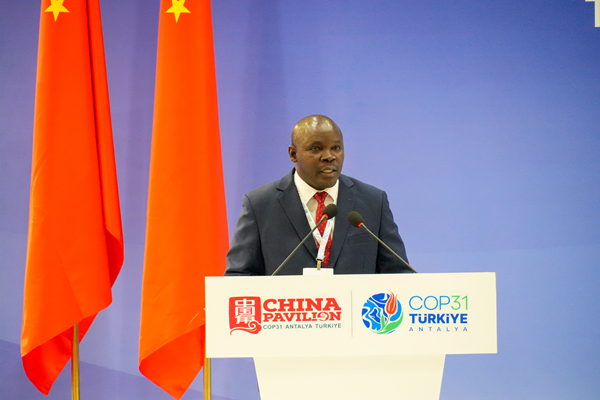
[Gilbert Siame, Minister of Green Economy and Environment of Zambia, delivers remarks at the forum. Photo by Li Ming.]
Zhao Yingmin, President of the BRI International Green Development Coalition (BRIGC) reported that the Coalition now encompasses over 190 partners and 64 members from nearly 50 countries. The Coalition recently hosted the 2026 Belt and Road Green Innovation Conference in Hong Kong and released the Global South Green Development Outlook 2026. He stated that the Coalition will focus on ensuring that green technologies are “affordable, effective, and sustainable”, that green financing is “accessible, well-targeted, and viable”, and that capacity-building efforts “teach people how to fish”, thereby providing systematic support for the green transition in the Global South.
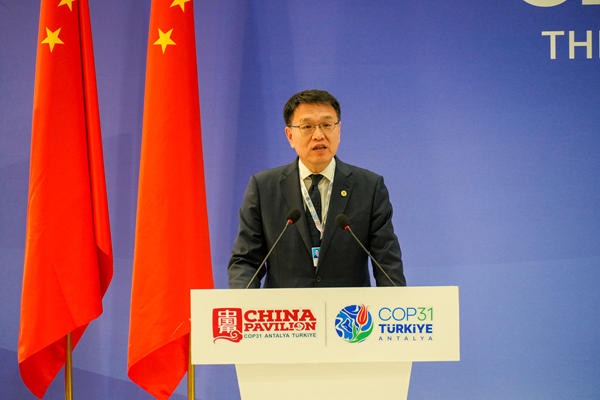
[Zhao Yingmin, President of the BRI International Green Development Coalition, delivers remarks at the forum. Photo by Li Ming.]
The representative of the Minister of Environment of Nigeria briefed on the progress of Nigeria‑China low‑carbon cooperation. The two sides signed an agreement to jointly develop the Lekki Low Carbon Demonstration Zone during COP29. At this forum, they further promoted the signing of a new cooperation document covering photovoltaic power generation, pure electric buses, DC charging infrastructure and solar streetlights.
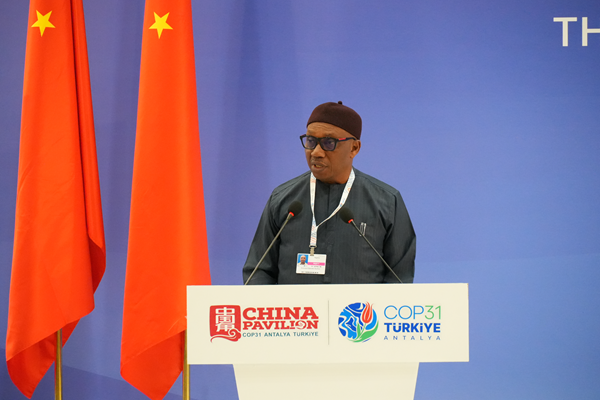
[The representative of the Minister of Environment of Nigeria delivers remarks at the forum. Photo by Li Ming.]
WORKING TOGETHER, CHARTING OUR COURSE
The forum also held a thematic roundtable discussion on “South-South Cooperation Empowering the Low-Carbon Transition”, moderated by Zhang Zhifeng, Director General of Foreign Environmental Cooperation Center, Ministry of Ecology and Environment.
Dima Al-Khatib, Director of the United Nations Office for South-South Cooperation, introduced the “South-South Galaxy Plus” knowledge-sharing platform and the Global Alliance for South-South and Triangular Cooperation, launched in September this year, and she called for the use of institutionalized platforms to amplify the scale effects of South-South cooperation. Gernot Laganda, Global Practice Director for Climate & Environment at UNICEF and Head of Delegation to COP31, UNICEF, pointed out that there is approximately $5 billion in investment potential just for providing electricity to off-grid schools and medical facilities in Eastern and Southern Africa, with an additional $3 billion in potential in West and Central Africa. He recommended a blended finance model combining “catalytic funding, concessional funding, and insurance” to leverage private capital.
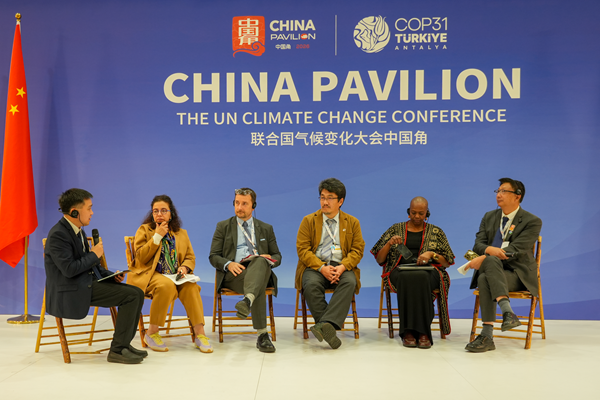
[Special Roundtable Discussion Session. Photo by Li Ming.]
Zhang Xiaohua, a representative of “ClimateWorks Foundation”, drew on project experiences in 27 countries of the Global South to analyze the five key challenges facing these nations in their low-carbon transition. She also outlined practical initiatives, such as launching the Global Photovoltaic-Storage Association and exploring collaborative projects at the Lekki Industrial Park. Matai, a representative of the World Resources Institute, emphasized that the Global South needs not merely a “transition”, but rather future-oriented “green development”, and that partnerships should place communities at the center. Yao Li, President of TAILG Science and Technology Co.,ltd, shared the company’s practices in integrating “solar-storage-charging-swapping” and closed-loop battery recycling. He noted that TAILG signed a cooperation agreement with the United Nations Development Programme (UNDP) in July of this year and released the TAILG Low-Carbon Action Plan and the Africa Project Handbook, with plans to host an event to showcase these achievements at the UNDP Africa Headquarters in early 2027.
Participants agreed that the outcomes released at this forum are “tangible, concrete, and effective”, providing strong support for developing countries to unite, strengthen themselves, and work together to seize the opportunities presented by the green and low-carbon transition. China expressed its willingness to work with its partners in the Global South to continue deepening South-South cooperation on climate change, promote the comprehensive and effective implementation of the UNFCCC and the Paris Agreement, and inject certainty and positive energy into global climate governance and sustainable development.
 Editor:Gao Weiyi


