

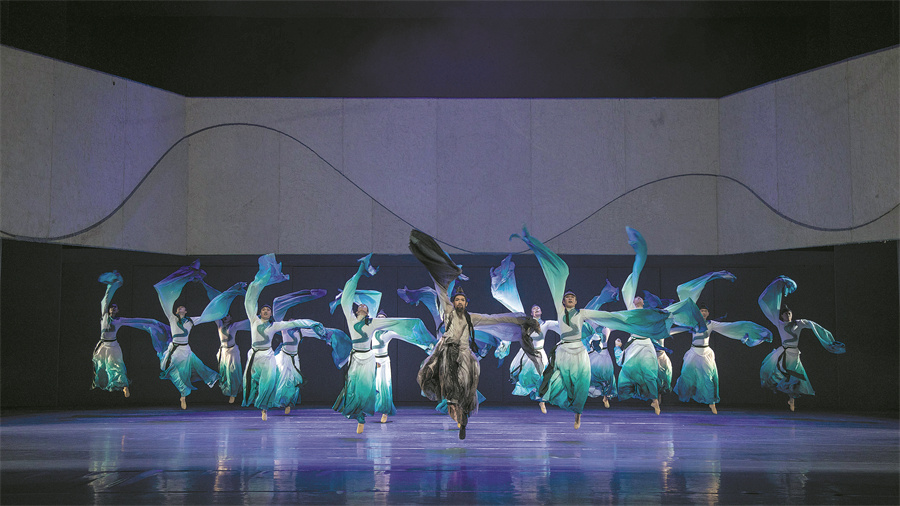
A scene from Ancient Hues: National Treasures of Liaoning, a dance drama inspired by the precious artifacts from the Liaoning Provincial Museum, will be staged in Beijing, creating a dialogue between the present and the distant past. CHINA DAILY
A jade pig-dragon suddenly comes alive. Women from a Tang Dynasty (618-907) painting glide across the stage. A courtly crane takes flight, while the sound of an ancient guqin (a seven-string Chinese zither) and bronze bells fills the air.
In the dance drama Ancient Hues: National Treasures of Liaoning, 17 precious artifacts from the Liaoning Provincial Museum are transformed from silent objects into living images through dance, theater, poetry, and multimedia.
The production, premiered in May 2025, was created by the Liaoning Song and Dance Troupe in collaboration with the Liaoning Provincial Museum, and has toured several Chinese cities.
It will be staged in Beijing on Sept 15 and 16 as part of the ongoing 7th National Ethnic Minority Art Festival.
For playwright Ma Lin and director Ma Yuli, the challenge was not a lack of material, but an abundance of it.
"The museum has so many treasures," says Ma Lin. "The question was how to bring them together without making the production feel like a collection of unrelated dances."
The answer was the museum-night concept: A young visitor named Moxuan enters the museum and encounters a mysterious guide — a personification of the typical Hongshan-culture jade pig-dragon, a dragon with pig-like features. Together, they lead the audience through different galleries and historical periods.
The Neolithic Hongshan culture flourished in northern China about 6,500 to 5,000 years ago. Named after the Hongshanhou site in Chifeng, North China's Inner Mongolia autonomous region, it extended across parts of present-day Inner Mongolia and Liaoning and Hebei provinces.
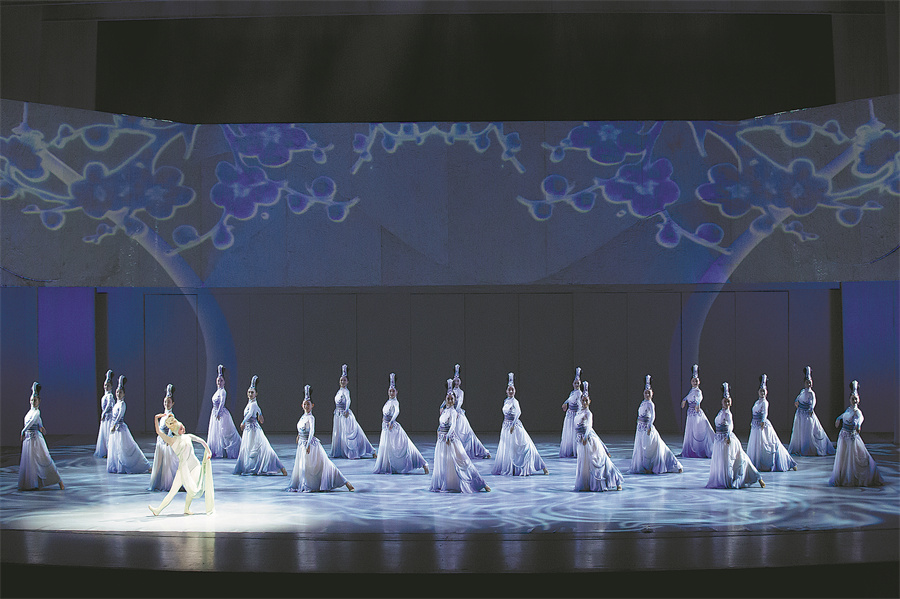
A scene from Ancient Hues: National Treasures of Liaoning, a dance drama inspired by the precious artifacts from the Liaoning Provincial Museum, will be staged in Beijing, creating a dialogue between the present and the distant past. CHINA DAILY
The jade pig-dragon was chosen not only for its importance as a signature object of Hongshan culture, but also for its playful shape. Rather than presenting it as a solemn symbol of an ancient civilization, the production turns it into an animated, witty character.
"We wanted a creature who could bring a sense of life and humor to the stage," says Ma Yuli. "Otherwise, audiences might feel as if they were simply coming to watch a typical museum performance."
Moxuan, meanwhile, represents a younger generation increasingly drawn to museums and traditional culture. Their encounters create a dialogue between the present and the distant past.
The production unfolds in four sections: calligraphy, painting, music, and artifacts, comprising 10 independent dance pieces.
Among the featured treasures housed at the Liaoning Provincial Museum are the Tang Dynasty (618-907) painting Court Ladies Adorning Their Hair with Flowers, the legendary traditional Chinese painting masterpiece Rui He Tu (Auspicious Cranes) created by Zhao Ji (1082-1135), who was also known as Emperor Huizong during the Northern Song Dynasty (960-1127), and the Jiuxiao Huanpei, a Tang Dynasty guqin.
Many of the objects offered unexpected possibilities for movement, says the director of the dance drama.
In the Auspicious Cranes segment, dancers translate the birds' flight into sweeping choreography. Court Ladies Adorning Their Hair with Flowers is more restrained, with the dancers reinterpreting the six aristocratic w o m e n's elegant poses depicted in the classic painting.
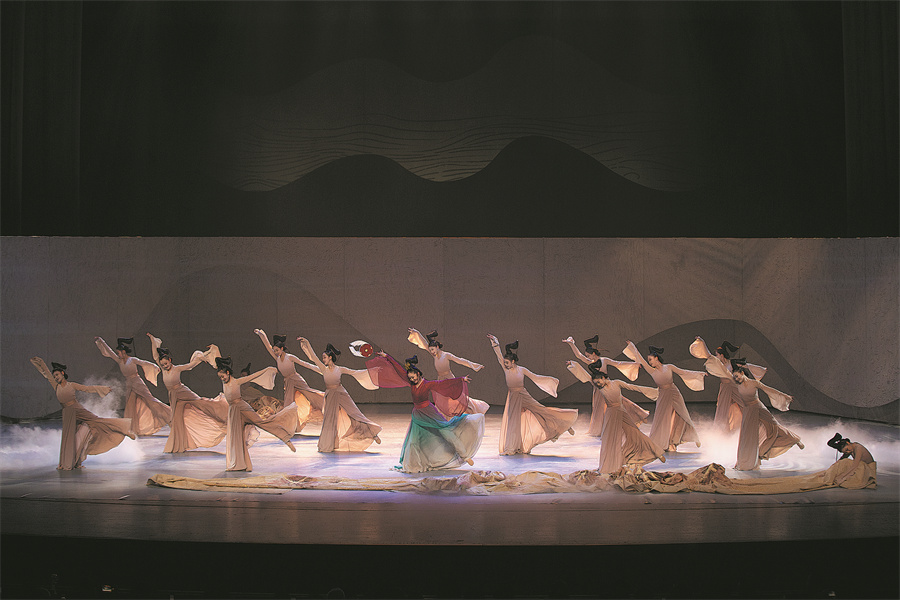
A scene from Ancient Hues: National Treasures of Liaoning, a dance drama inspired by the precious artifacts from the Liaoning Provincial Museum, will be staged in Beijing, creating a dialogue between the present and the distant past. CHINA DAILY
"Accuracy is very important to me," says Ma Yuli. "If the dancers move too much, they lose the aristocratic quality of the figures."
The costumes and makeup for the six women were closely replicated from the painting, while their choreography draws on the painting's sense of leisurely elegance.
The ancient guqin also appears as a tangible stage presence, accompanied by traditional music, while calligraphy — especially the fluid strokes of cursive script — inspires the movements.
For the creators, the central task was to give movement to objects that were never designed to move. "Turning static artifacts into movement is a huge challenge," Ma Lin says.
The production team spent more than a year researching the collection, repeatedly visiting the museum, examining the original objects, and consulting museum specialists. They selected artifacts not only for their historical significance but also for their potential to inspire movement.
The result is deliberately varied. Each of the 10 pieces has its own visual language, color palette and emotional character, preventing the production from becoming repetitive.
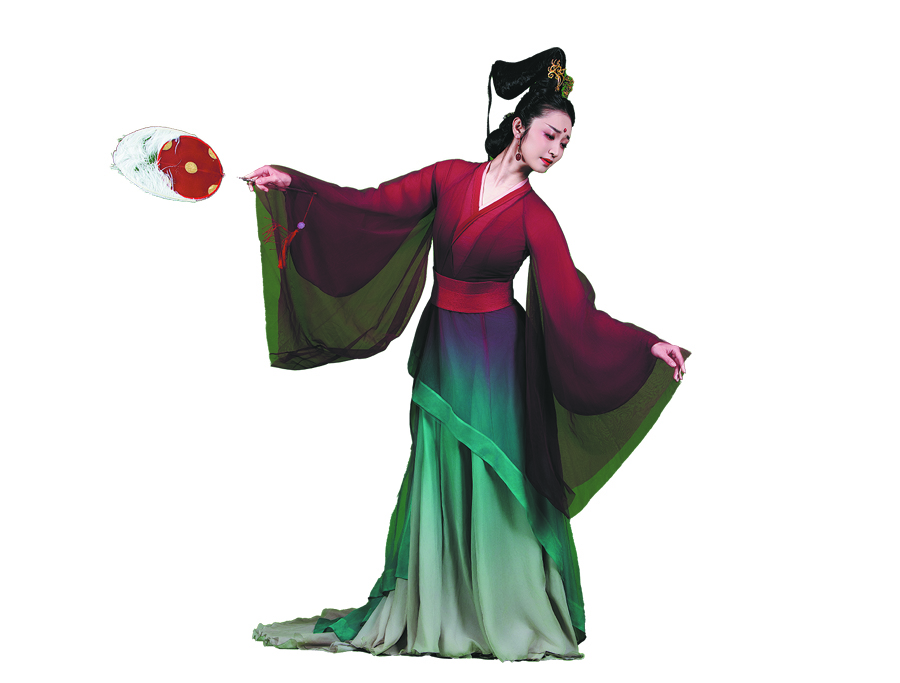
Dancer Li Bo, playing Luoshen, the legendary beauty depicted in the ancient painting Luoshen Fu Tu (ode to the goddess of the Luo River), in the dance drama. CHINA DAILY
The response has encouraged the creators to keep developing the work. The production has been performed regularly at the Liaoning Provincial Museum, where some visitors have returned two or three times. Before performances, replicas of the featured treasures are displayed in the theater foyer, turning the space into a small "moving museum" where audiences can learn about the objects before seeing them transformed onstage.
Audiences have responded with particular enthusiasm, telling the creators they had never imagined traditional Chinese culture could be presented in this way.
For Ma Yuli, that reaction points to the production's larger purpose.
"I believe beauty comes in many forms," she says. "The treasures themselves give us a sense of wonder, while artistic expression gives us imagination. We hope the two can meet on the stage and help more people discover the richness of Chinese culture. "For dancer Li Bo, playing Luoshen, the legendary beauty depicted in the ancient painting Luoshen Fu Tu (ode to the goddess of the Luo River), means doing more than merely re-creating a famous image.
The famous handscroll is traditionally attributed to Eastern Jin (317-420) painter Gu Kaizhi, who created Luoshen Fu Tu based on Cao Zhi's famous literary creation Luoshen Fu. The painting at the Liaoning Provincial Museum is a Song Dynasty (960-1279) copy after the original was lost. Cao Zhi wrote Luoshen Fu in the third century, describing a romantic, dreamlike encounter with the goddess of the Luo River.
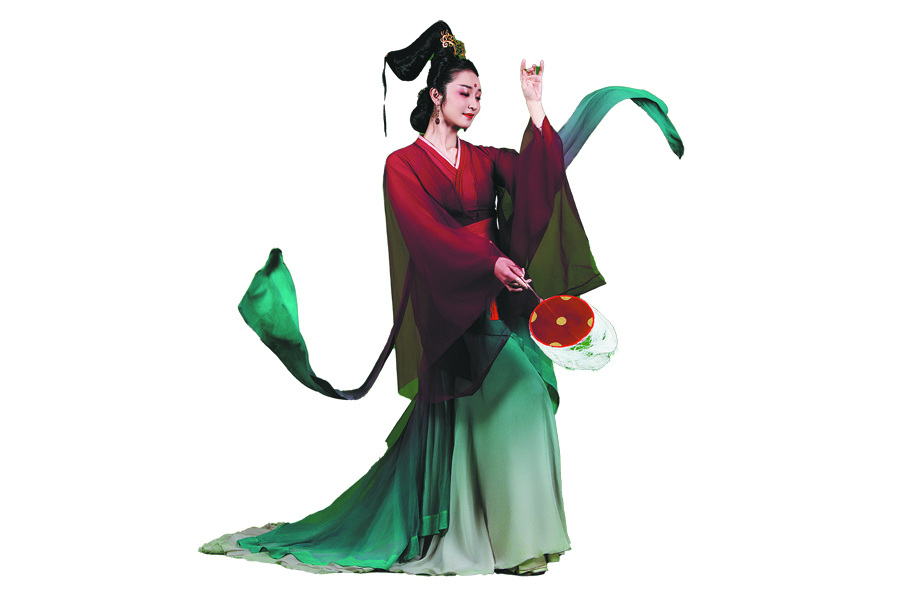
Dancer Li Bo, playing Luoshen, the legendary beauty depicted in the ancient painting Luoshen Fu Tu (ode to the goddess of the Luo River), in the dance drama. CHINA DAILY
"It's a very bold approach," Li says of the production, which tells the story from Cao Zhi's perspective through an expressive, impressionistic dance vocabulary. "Everyone is seeing Luoshen from his perspective. The audience becomes the people inside the painting."
The result is a romantic encounter across time: Cao Zhi and Luoshen never truly meet, yet their souls seem to connect through a fleeting glance.
For Li, that brief encounter is one of the most demanding parts of the six-minute performance. Luoshen's emotions shift from the moment she first catches Cao Zhi's eyes to the instant their spirits resonate.
"A glance back appears many times," she says. "During rehearsals, we have to work on the exact angle, where the eyes stop, and how long they stay there. It's about finding the right balance."
To prepare, Li studied the artwork closely and researched its historical and literary background. Even the fan she uses in the performance was reproduced to match the original artwork.
The process has also deepened her appreciation for ancient Chinese art. Li often visits museums and is particularly drawn to works such as Luoshen Fu Tu and ancient pottery figurines.
"The expressions give me a lot of inspiration," she says. "Even an object can appear to have its own personality."
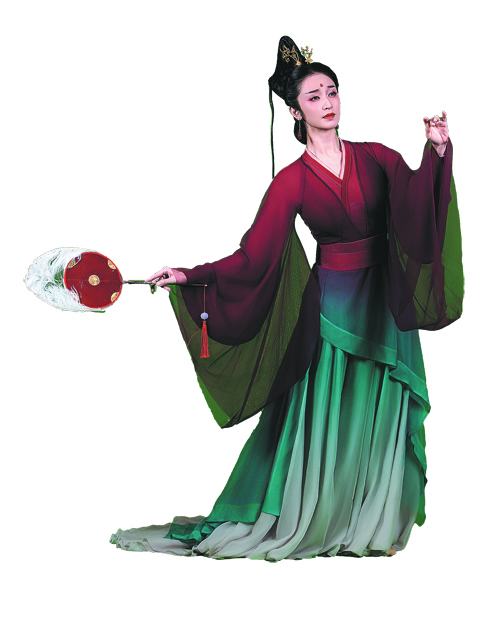
Dancer Li Bo, playing Luoshen, the legendary beauty depicted in the ancient painting Luoshen Fu Tu (ode to the goddess of the Luo River), in the dance drama. CHINA DAILY
 Editor:Cai Xiaohui

