

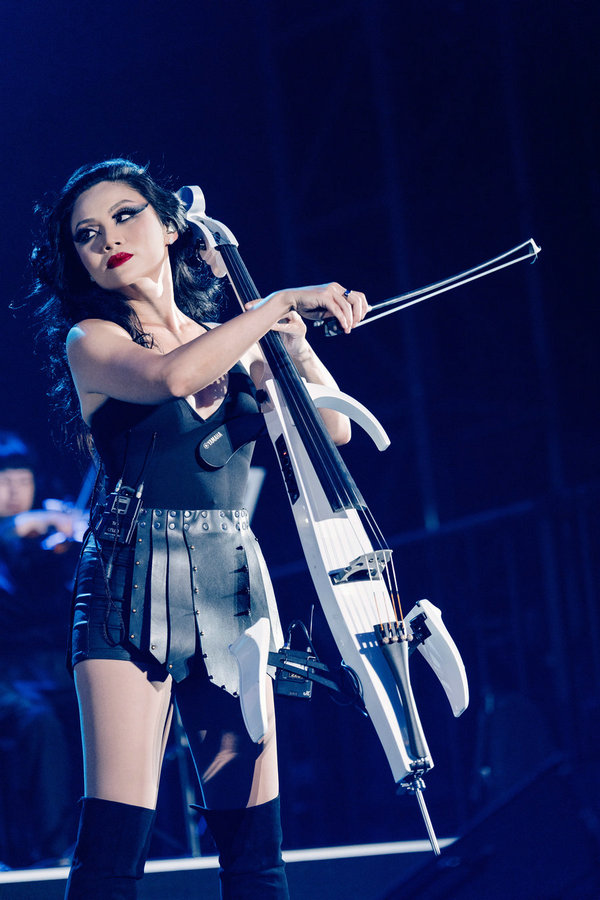
Cellist Tina Guo performs as a guest during Norwegian composer Thomas Bergersen's latest China tour. [Photo provided to chinadaily.com.cn]
For more than 15 years, cellist Tina Guo and Norwegian composer Thomas Bergersen have known each other through music. Yet, until this month, they had never performed together.
That changed in Beijing, when Guo joined Bergersen as a guest performer on his China tour from Aug 15 to 23, bringing her electric cello to his sweeping blend of orchestral, electronic and cinematic music.
"Tina and I have known each other for over 15 years but never had a chance to perform together because we were always busy with individual projects," Bergersen says. "When an opportunity finally arose, it was simply too good to pass up."
The long-awaited collaboration felt surprisingly effortless.
"I think Tina and I understand each other through music," Bergersen says. "When she plays a note, I already have the next note ready. Music flows effortlessly between us, making it a true pleasure to perform with her."
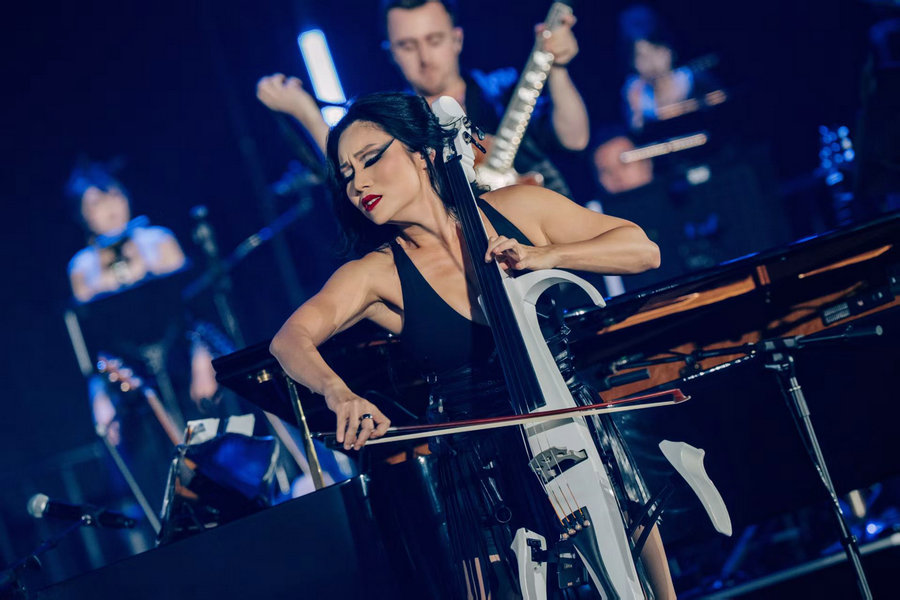
Cellist Tina Guo performs as a guest during Norwegian composer Thomas Bergersen's latest China tour. [Photo provided to chinadaily.com.cn]
For Guo, that kind of instinctive musical communication is precisely what performance should be about.
"When I play music, it's never about playing the notes," she says. "If there's a musician that's only playing notes, then they are not a musician. They are a technician."
Rather than deciding exactly what she wants an audience to feel, Guo says she simply plays what she feels at the moment. For her, a written composition is a channel through which a performer can express personal experiences, pain, love, and hope.
That belief helps explain a career that has rarely stayed within musical boundaries.
Born in Shanghai, Guo grew up in a family of classical musicians. Both of her parents performed with the Shanghai Symphony Orchestra. As a child, she was expected to practice for seven or eight hours a day. Music, she says, was initially not a choice.
"I actually did not love it, because it wasn't something I chose," she recalls.
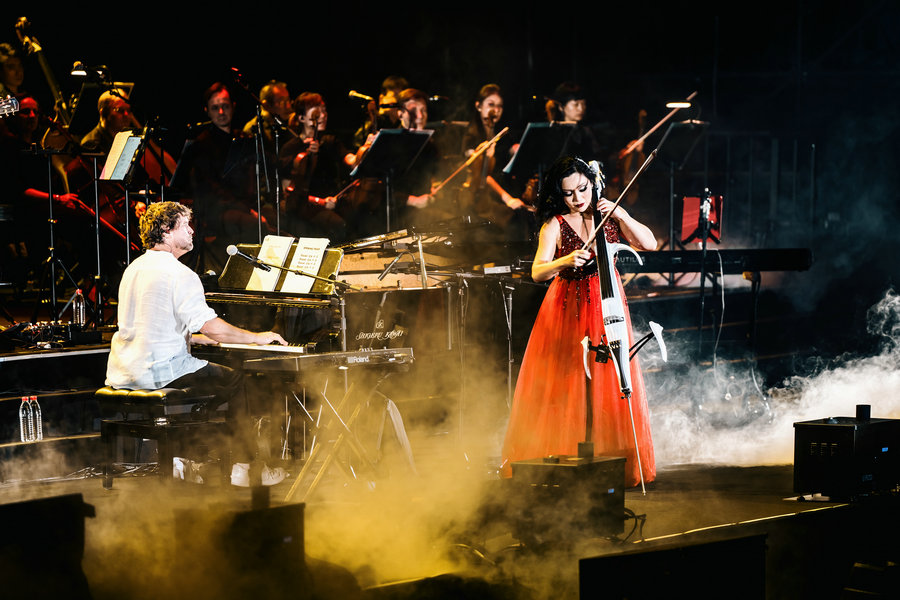
Cellist Tina Guo performs as a guest during Norwegian composer Thomas Bergersen's latest China tour. [Photo provided to chinadaily.com.cn]
At 12 or 13, she began listening obsessively to heavy metal and wished she could play the electric guitar, scream, and sing like the rock musicians she admired. Instead, she had a cello, and her relationship with music changed after she left home for college.
At 18, she began experimenting with an electric cello, eventually turning the instrument she once saw as a limitation into the distinctive sound that has taken her from concert halls to Hollywood soundtracks and heavy-metal festivals.
Her musical influences remain deliberately wide-ranging. She cites legendary cellist Jacqueline du Pre for her passionate playing, while also naming Marilyn Manson, System of a Down, Metallica, and Guns N' Roses among her formative influences.
"Music can actually be a tool for freedom and expression," Guo says.
That sense of freedom also shapes how she approaches large productions. She rejects the idea that a musician should constantly try to stand out.
In a large ensemble, the musical spotlight should move naturally from one instrument or section to another. Guo says her own moment of personal expression comes during a quieter passage in the show, when she and Bergersen perform together with piano and cello.
Away from the cello, Guo is equally comfortable with synthesizers. One of her favorite pieces in the Beijing program, Illusions, has her playing synthesizer.
For Guo, a little uncertainty is part of the attraction.
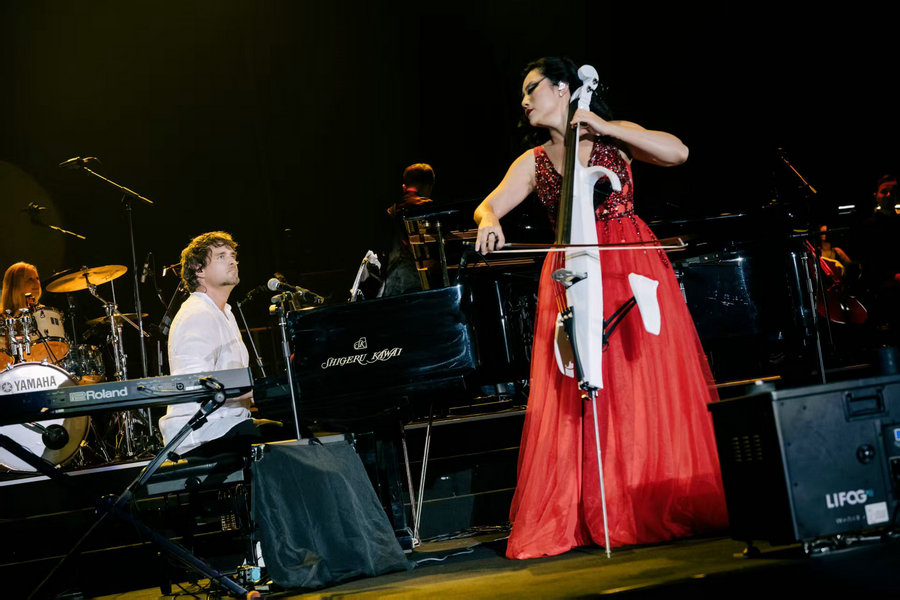
Cellist Tina Guo performs as a guest during Norwegian composer Thomas Bergersen's latest China tour. [Photo provided to chinadaily.com.cn]
That appetite for new experiences has also led her to make a major career decision. After working with composer Hans Zimmer for more than 15 years, she stepped away from the collaboration a little over a year ago to devote more time to her own music.
She is now developing a concept album set in the year 3000, combining electronic music, EDM (electronic dance music), metal, and synthwave, with some songs featuring her vocals.
The decision reflects a broader principle she offers to younger musicians: look inward rather than constantly chasing opportunities.
When composers hire her for major film projects, including Dune and Top Gun: Maverick, she says they often give her a simple instruction: be herself.
Her Beijing performance with Bergersen offered a vivid example of that philosophy. After 15 years of knowing each other, the two musicians did not need elaborate instructions to find their musical connection.
For Bergersen, it was almost as if the years of waiting had simply disappeared.
For Guo, perhaps that is the ultimate freedom of music: not having to choose between worlds, but being able to move naturally between them.
 Editor:Cai Xiaohui

