

“Geography is destiny.”
Since childhood, History and Geography have been two of my greatest passions. History tells us what happened. Geography helps us understand why.
China’s relationship with Central Asia is a perfect example.
To the west and southwest, China was protected by the Himalayas and other great mountain ranges. To the south, dense jungles and difficult terrain formed another natural barrier, while the sea guarded much of the east.
The north and northwest were different. There, the land opened into the vast Eurasian steppe, with few natural obstacles capable of stopping fast-moving armies.
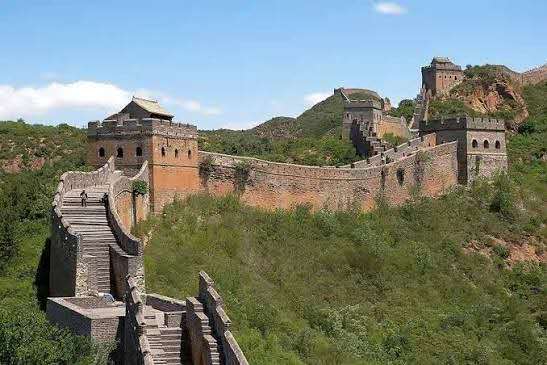
This helps explain why the Great Wall was built mainly along China’s northern frontiers.
For centuries, China faced mobile pastoral societies that had mastered the horse and could cross enormous distances rapidly. Figures such as Genghis Khan, Attila and Modu Chanyu emerged from this wider steppe world.
But that world no longer exists.
Central Asia is no longer a land from which nomadic armies could threaten China. Today, it is a region of sovereign states seeking stability, development and cooperation.
In my view, this is precisely why China and Central Asia should deepen their partnership.
The threats they face today do not arrive on horseback. They spread through extremist propaganda, terrorist networks, separatism, drug trafficking and organised crime.
A radicalised young man can travel to a war zone, receive military training and return capable of recruiting others or organising attacks. These threats do not respect borders, and no country can confront them alone.
This is where the Shanghai Cooperation Organisation becomes essential.
The SCO allows China and the Central Asian states to exchange intelligence, coordinate border security, monitor extremist networks and conduct joint exercises.
The Great Wall represented security through separation.
The SCO represents security through cooperation.
In my opinion, this is one of the most important transformations in Eurasian history. An old frontier of confrontation can now become a region of stability and common development.
Security, however, is only the beginning.
China and Central Asia are natural economic partners. Geography has already placed them side by side, allowing them to trade by road, rail and pipeline without crossing oceans.
Central Asia can offer China energy, minerals, agricultural products and secure land routes across Eurasia. China can offer investment, technology, infrastructure and access to one of the largest markets in the world.
This is not charity. It is mutual interest.
Energy is perhaps the clearest example. Central Asia possesses oil, natural gas, uranium and enormous renewable-energy potential. China has the capital, technology and industrial experience to help develop these resources.
For China, this means reliable supplies from close and friendly neighbours. For Central Asia, it means infrastructure, employment and economic growth.
Cooperation should also help Central Asian countries develop their own industries.
Cotton can become clothing, fruit can be processed and packaged locally, and minerals can be refined before export. This would create skilled jobs and allow more wealth to remain inside the region.
In the past, Geography placed China and the peoples of the steppe on opposite sides of walls.
Today, that same Geography gives them every reason to cooperate.
China needs stable western borders, dependable partners and secure land routes across Eurasia. Central Asia needs investment, markets and protection from extremism.
The SCO provides a platform where these interests can meet.
Its greatest achievement may be transforming an old frontier of confrontation into a bridge of security, trade and shared prosperity.

By Leonardo De Moura Russo ,Financial Analyst ,Journalist and Independent Content Creator from Brazil
 Editor:Gao Weiyi

