

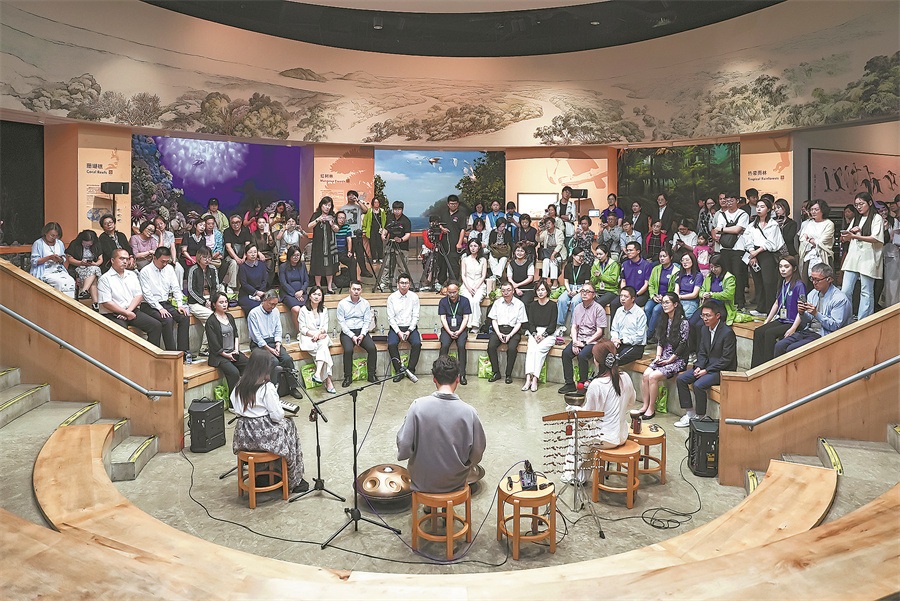
A live performance amid lush botanical displays at the Window of Nature zone of the Shanghai Natural History Museum on June 15, to mark the launch of the city's first museum prescription. [Photo provided to China Daily]
A cellist performs amid lush botanical displays at the Shanghai Natural History Museum's Window of Nature zone as the first group of participants sits in quiet meditation. Absorbed by the soothing melodies, Shanghai's first "museum prescription" program officially launched, delivering drug-free immersive mental healing through science and cultural venues.
A joint initiative by the Shanghai Science and Technology Museum (SSTM) and the Shanghai Mental Health Center (SMHC), the program is the city's first social psychological support project pairing a popular science venue with a specialized mental health institution, marking the second round of in-depth cross-sector collaboration between the two sides. The very first prescription was issued at the launch ceremony on June 15.
Unlike clinical drug prescriptions, the "museum prescription" is a professionally assessed, non-clinical healing guideline, also classified as a social prescription.
It is distributed through two channels: medical institutions across the city's mental health service network, where doctors prescribe it to eligible patients following an evaluation; and community-level public service centers, where trained volunteers connect residents in need with relevant resources. Prescription holders enjoy free-of-charge admission to designated venues and access to exclusive healing activities.
"We create low-threshold scenarios to integrate mental health services into daily life, so people do not come under the pressure of 'seeking medical treatment'," says Qiao Ying, chief physician at SMHC.
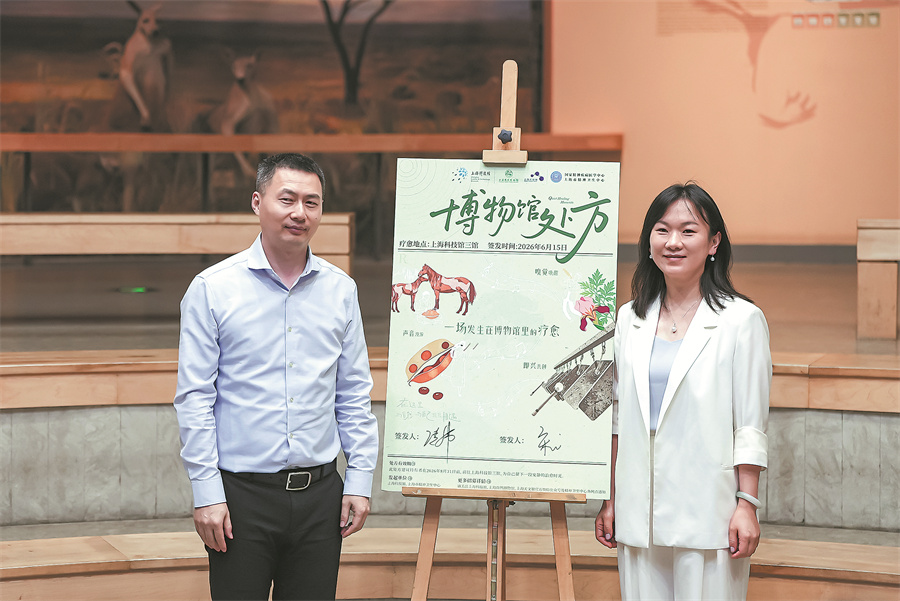
The very first museum prescription is issued at the launch ceremony at the Shanghai Natural History Museum on June 15. [Photo provided to China Daily]
The program tailors differentiated healing content using resources from three SSTM venues — the main SSTM site presents horse whisperer soundscape therapy based on its Galloping Wonders special equine exhibition; the Shanghai Natural History Museum runs the weaving melodies of nature alongside its Only Tree Knows exhibition; and the Shanghai Astronomy Museum hosts starry sky healing concerts.
"We prioritize spaces where science and art converge, and design problem-oriented activities for specific groups," says Song Xian, director of SSTM's science communication center. "These are not simple extensions of permanent exhibitions, but exclusive immersive designs focused on emotional relief."
The first batch of prescriptions prioritizes socially isolated older adults suffering from cognitive decline and high-stress working professionals.
"Many people do not regard loneliness as a health risk, but it actually raises the natural mortality rate among the elderly by 22 percent, inflicting more health damage than obesity, diabetes or heart disease," Qiao notes.
She explains that multisensory healing experiences balance activity in the prefrontal cortex and amygdala, helping people activate inner psychological energy and promote positive mind-body integration.
To ensure professional delivery, the program has recruited its first cohort of museum-healing mentors, comprising licensed psychotherapists and senior museum educators. They will receive systematic training in mental health expertise and therapeutic activity designed to bridge medical services and cultural resources.
"Museums are not only temples of knowledge, but also harbors for the soul," says Zhong Qian, deputy curator of SSTM, expressing hope that the healing power of nature and science would reach more people through the program.
Lu Baorong, a professor at Fudan University, adds scientific backing: "Natural specimens in museums carry inherent aesthetic order. Immersive aesthetic experiences guide people to relax, stay focused on the present, and deliver unique healing value."
Around 450 free-of-charge healing prescriptions will be available in the initial pilot phase, valid through the end of August.
Going forward, the two sides plan to explore integrating the "museum prescription" into the city's public health service system and to launch a Shanghai Museum Healing Alliance to bring more art galleries and cultural venues on board and expand mental health support coverage.
"Mental health services should not be confined to clinics," says Xiao Junjie, Party secretary of SMHC. "Museums build low-threshold, stigma-free social support scenarios, truly integrating healing into daily life."
 Editor:Gao Weiyi

