

Strolling through the ancient pavilions of Yuyuan Garden, British tourist Alfie Oliver pauses to admire an elaborate floral installation that complements the traditional architecture.
"The flowers are beautiful and enhance the gorgeous architecture of Yuyuan Garden perfectly," says Oliver, a first-time Shanghai visitor. "I've seen flower installations throughout the area. There's nothing like this back home."
Oliver is among many attending the 2026 Shanghai International Flower Show, which opened on April 18 and will run through May 10.
"We're reimagining the concept of the traditional flower show to create a comprehensive urban experience," says Zhu Xinjun, deputy director of Shanghai's landscaping and city appearance administrative bureau.
"Citizens and tourists are not just spectators of the floral world, but participants," Zhu explains. "Professional horticulture enhances urban living environments throughout the city."
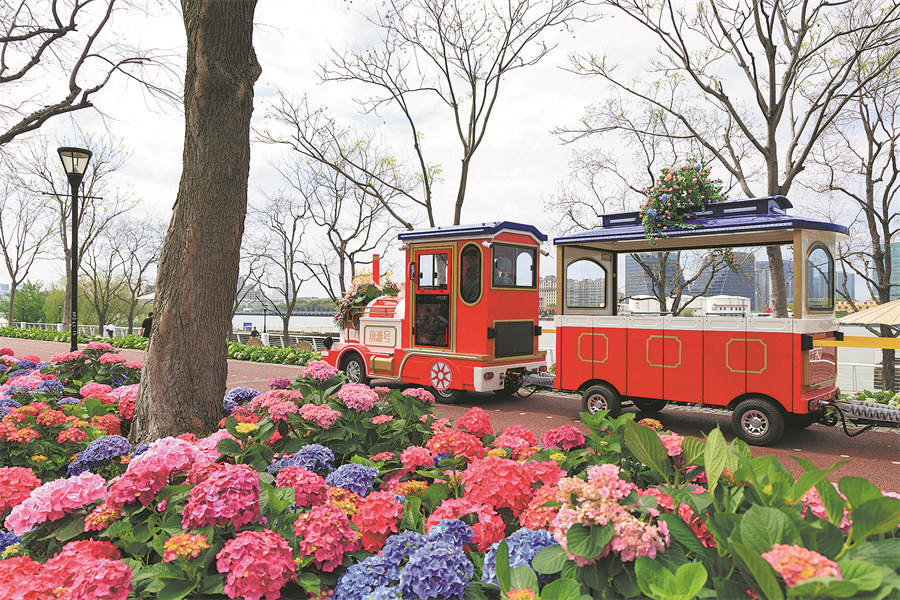
A mini-train at the Pudong Qiantan sub-venue in Shanghai. CHINA DAILY
The festival centers around two main venues — the Shanghai Botanical Garden and Huangpu district — complemented by 10 sub-venues spanning Pudong New Area, Xuhui, Jing'an, and Changning, among others. Beyond these dedicated spaces, the celebration extends into commercial areas, parks and green spaces across all of Shanghai's 16 districts.
At the 40-hectare Shanghai Botanical Garden, visitors can discover over 400 new and superior plant varieties across four designed sections: new plants, edible plants, community gardens, and rare plants.
"We've selected 18 varieties for debut from 28 organizations' 78 new varieties, including seven new international varieties," says Yan Wei, head of the Shanghai Botanical Garden. "Through this festival, we aim to promote horticultural innovation by launching new varieties on a global stage."
Visitors can see cutting-edge horticultural achievements featuring the China rose, azalea, dwarf petunia, iris ensata, and many other domestic and international cultivars making their debut.
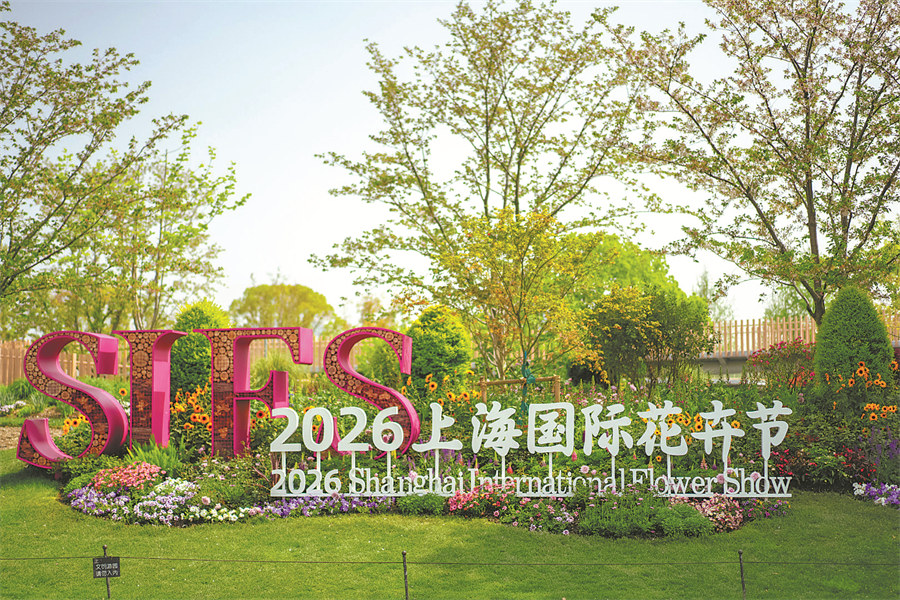
Main venue of the Shanghai Botanical Garden. CHINA DAILY
The Huangpu urban venue presents more than 40 themed gardens and 60 window installations across 41 hectares, blending professional horticulture with urban living spaces.
"Xintiandi and the ancient city park near Yuyuan Garden serve as dual cores of our urban showcase," says Wang Bin, deputy head of Huangpu district. "These represent both modern trends and historical cultural context through numerous garden installations."
Among them, the world garden section at Xintiandi features works by renowned garden designers from the United Kingdom (including the Chelsea Flower Show teams), the United States, the Netherlands, Germany, and other countries.
"This is a celebration of plants, flowers and green spaces, and this is a unique city," says Tim Edwards, president of the Sino-European Horticultural Association. "This is a great opportunity to talk to the whole world about Shanghai and China. Green spaces and flowers are an international language."
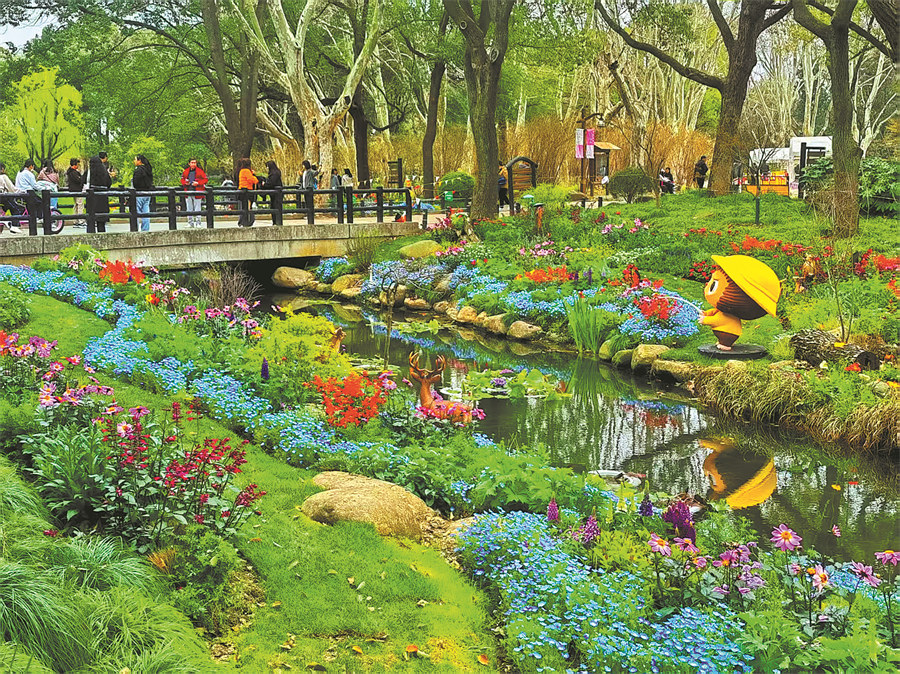
Garden at the Shanghai Gongqing forest park sub-venue in Yangpu district. CHINA DAILY
The festival's reach extends far beyond the main venues. Commercial areas and parks throughout the city's 16 districts have been transformed into a unified tapestry of spring blooms.
For Shanghai resident Zuo Feng, the creativity on display is most impressive. "The artists' innovative ideas are remarkable. They create animals with artistic sense and vitality using flowers, integrated with everyday scenes. The color compositions are excellent, too," he says.
"What makes this event special is how it uses floral art to connect the entire city," Zuo adds. "You can enjoy flowers, visit malls, have coffee, then stroll to the riverside to take in the scenery. It creates a more vibrant feeling."
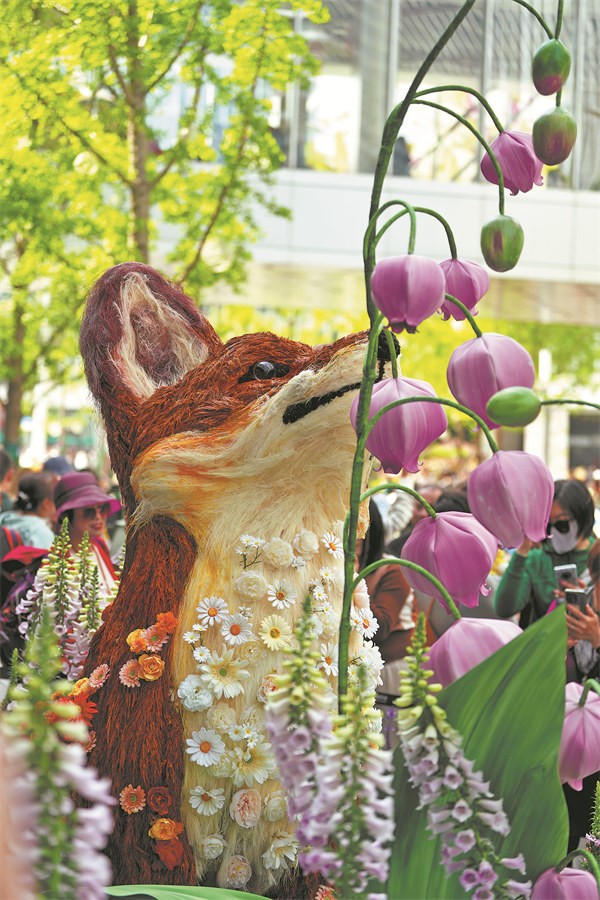
Animal-shaped floral arrangements at the Pudong Qiantan sub-venue. HE QI/CHINA DAILY
Swedish visitor Marcus Stjernborg shares this feeling. "I was truly impressed by the beauty of all the flowers and decorations," he says, admiring the animal-shaped floral arrangements at Qiantan in Pudong.
The festival is also driving Shanghai's economy. Yang Yao of the Shanghai Commerce Commission explains that the flower festival plays a significant role in Shanghai's development as an international consumption center.
"Throughout the festival, we're using flowers as a connecting element to elevate commercial spaces, allowing residents and visitors alike to better experience the charm of Shanghai as an international consumption destination," Yang says.
The festival features themed commercial districts with nearly 50 large commercial complexes participating, creating more than 100 spring-themed display windows. Additionally, over 50 special events, including floral-themed music markets, are taking place across various commercial districts.
Liu Wei, assistant general manager of Shui On Xintiandi, describes how they've transformed the entire community into a city garden reception room where visitors can wander, linger, and shop.
"With 40 merchants creating urban flower windows and 45 brands launching flower-themed products, we've created a unique shopping experience around the festival," he adds.
This year also marks the 30th anniversary of Shanghai-Yunnan cooperation, a relationship further strengthened by the festival. The initiative connects Yunnan flower producers directly with Shanghai consumers while helping transform Shanghai from a consumption hub into a major distribution center.
Tourists can navigate the festivities via three flower-themed routes that combine exhibitions, shopping, dining, and accommodation. Sports activities include cycling events, forest half-marathons and garden yoga sessions.
The festival also focuses on residents' participation with community garden initiatives, plant appreciation events, family gardening activities, and natural education workshops.
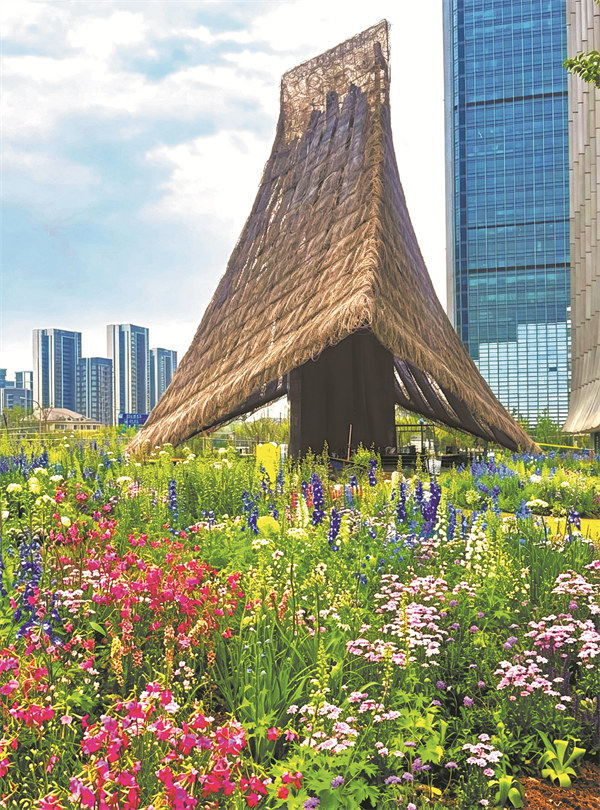
Floral scenery at the Xuhui sub-venue. CHINA DAILY
Lyu Zhihua, director of Wanhua (Shanghai) City Management Co, the festival's operating company, emphasizes the long-term vision.
"We're not simply organizing a 23-day event but establishing a sustainable framework," he says. "We'll preserve exceptional installations, introduce mini gardens into communities, and promote superior plant varieties.
"Our goal is to make gardening a regular part of citizens' consumption habits and lifestyles," Lyu adds. "Whether growing flowers at home, appreciating them in parks, or enjoying flower culture in commercial districts, residents and visitors can experience the urban magnetic pull brought by the Shanghai International Flower Show."
He Qi and Li Junfeng contributed to this story.
 Editor:Gao Weiyi

