

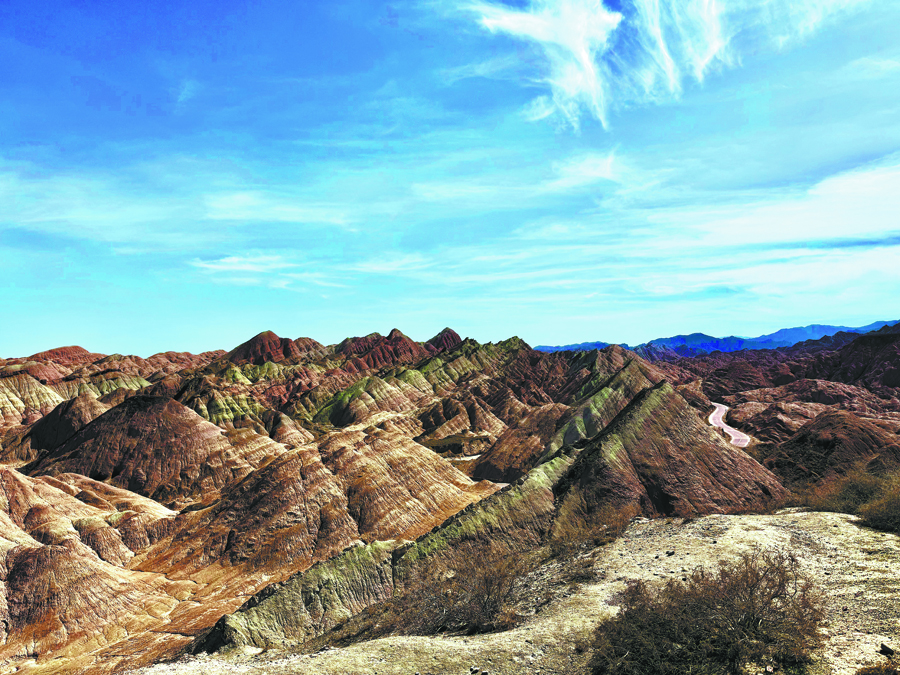
Take a side trip by rail from Dunhuang to view the "Rainbow Mountains" at the Zhangye Danxia National Geopark from viewing platform. [Photo by Kara Schroeder/China Daily]
Coming from a country under 250 years old (the United States), living in China and discovering even just a tiny bit of its past is astounding; sometimes it is overwhelming.
Between learning about the various dynasties and ethnic groups, there are also arts, handicrafts, ancient sites, cuisines, policies, economics, and so much more. One of my favorite places to learn about China's ancient history is Dunhuang, a small, county-level city in Gansu province. After many visits, you still won't be able to grasp all there is to learn.
Dunhuang was the first trading town that foreign merchants reached on the ancient Silk Road as they entered Chinese territory from the west, making it a hub for cultural and commodity exchanges.
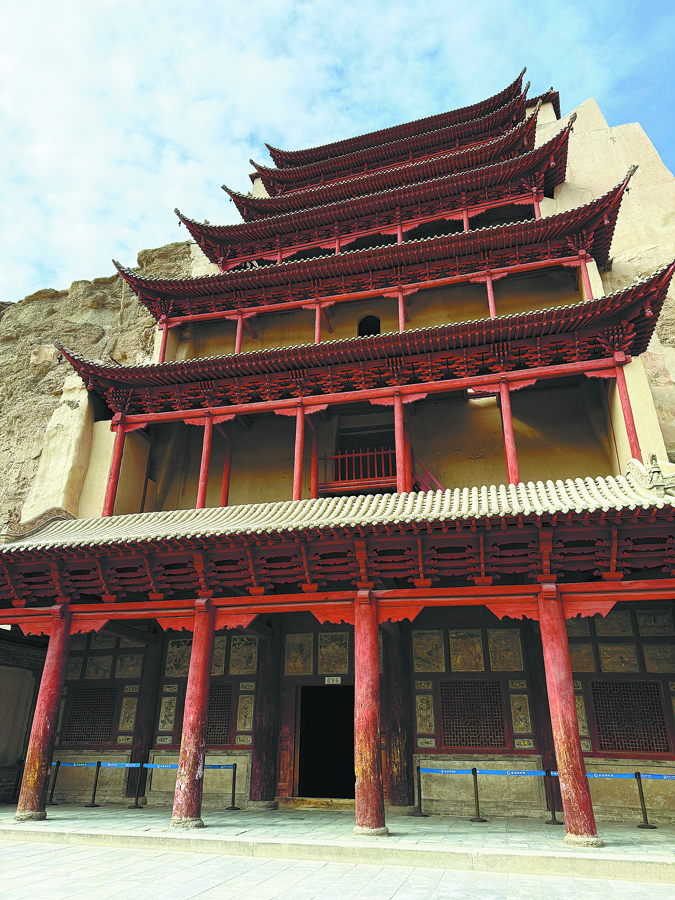
Take a car 40 minutes to the Starry Gaze Hotel recreation area to see replicas of famous sites in China, including this Sleeping Buddha statue. The Mogao Caves house murals and Buddhist art preserved over centuries. The site offers English-speaking tour guides to learn about its extensive history. [Photo by Kara Schroeder/China Daily]
Situated in the desert, it is home to the fascinating Mogao Caves, a UNESCO World Heritage site. There are 735 caves dating back to different dynasties, housing the most exquisite and extensive Buddhist art in the world. Murals cover the walls and ceilings, each symbolizing Buddhist beliefs and the daily lives of various gods and common people. Statues populate nearly all of the caves. The most astounding fact: many of the paintings and statues are still preserved today, even after centuries of harsh weather conditions and human-inflicted damage.
Cave No 17 (the Library Cave) is the most fascinating of the 735 caves. When you visit, you may only get a tour inside 10 caves, and the Library Cave is open year-round. Accidentally discovered in 1900 by Taoist monk Wang Yuanlu, over 50,000 relics, including manuscripts, ritual objects, silk paintings, and much more, had been sitting in the cave, providing a rich source of invaluable historical data. Unfortunately, officials at the time hadn't realized the cultural significance of these relics, and thousands were scattered across the world, now housed in museums and private collections.
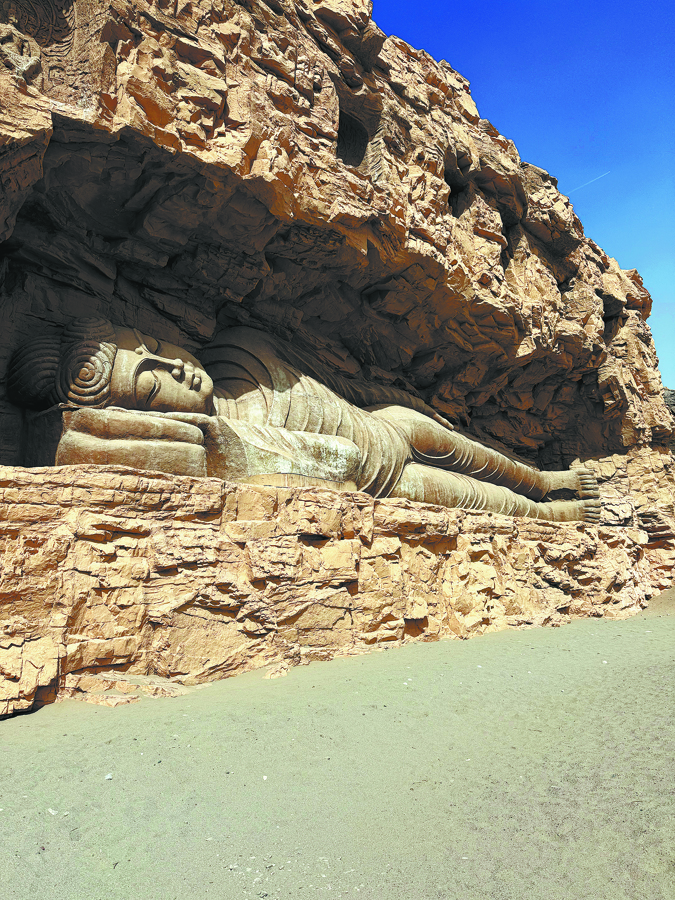
Take a car 40 minutes to the Starry Gaze Hotel recreation area to see replicas of famous sites in China, including this Sleeping Buddha statue. The Mogao Caves house murals and Buddhist art preserved over centuries. The site offers English-speaking tour guides to learn about its extensive history. [Photo by Kara Schroeder/China Daily]
If you check social media posts with the hashtag "Dunhuang", you'll see many posts of people riding camels at Mingsha Mountain Crescent Lake. One of Dunhuang's most famous tourist attractions, this site is also known as the "oasis in the desert" for its crescent moon-shaped lake smack-dab in the middle of sand dunes. Amazingly, this is a naturally formed wonder, and how it materialized and has not been covered by sand over the centuries has been extensively researched.
It takes a lot of effort, but climbing up the dunes to watch the sunset and get an aerial view of the pagoda and lake is a must-do. The best way to go back down? Take the slide for an exhilarating ride.
To learn more about how far back Dunhuang's history goes, and how vast it is, a visit to the Dunhuang City Museum is essential. The museum houses many relics, some replicas, of tools and daily objects that were used between the Wei (220-265) and the Jin (1115-1234) dynasties. These relics include simple items such as shoes and more complex objects like guardian statues. The museum also offers a large gift shop, where you can purchase cultural heritage items for your friends and family. The best part: entrance to the museum is free of charge.
For a vibrant ending to each day of your visit, Shazhou Night Market is buzzing with life. The streets are filled with craftsmen creating authentic cultural souvenirs, and many chefs gather in their booths to serve local delicacies. Small fire pits set out during the chilly nights make it much more bearable to sit and enjoy lamb skewers and spicy flat noodles. Make sure your digital payment is ready on your mobile phone, because it is very hard to resist shopping and eating each night.
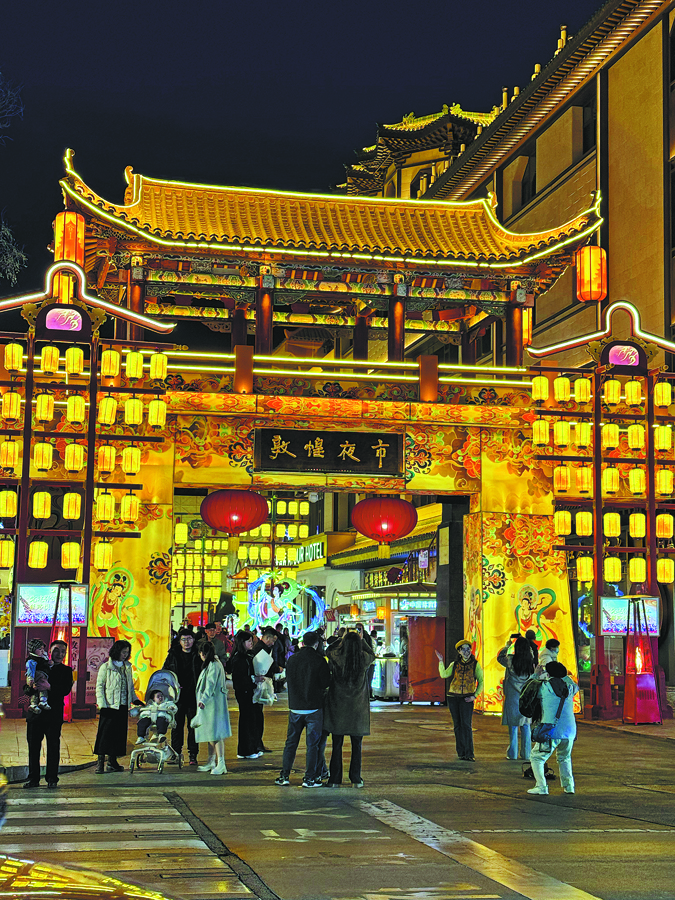
The entrance to the Dunhuang Night Market. [Photo by Kara Schroeder/China Daily]
If you have time (I recommend making time), hop on an early train from Dunhuang to Zhangye West Railway Station, take a car for about an hour, and head to Zhangye Danxia National Geopark (Zhangye UNESCO Global Geopark) to take in the "Rainbow Mountains". These landforms were once part of the ocean about 540 million years ago. Tectonic plate collisions formed the mountains, and red sandstone turned into multicolored ridges of weathered strata thanks to changes in the sedimentary environment. It takes about two hours to visit four viewing platforms, and it's totally worth the trip to see this natural marvel. A late afternoon train gets you back to Dunhuang before 10 pm.
Dunhuang is a small county-level city, but it offers a broad view of ancient China and the Silk Road trade, along with extensive information on Buddhism, cultural exchange, ethnic groups, and archaeology. Be prepared to be fascinated, scintillated, astonished, and excited all in one trip. An old myth about a nine-colored deer and a broken promise captured my attention at the Mogao Caves and stuck with me throughout my visit. I could tell you about it, but I think it's better if you go and hear the story yourself.
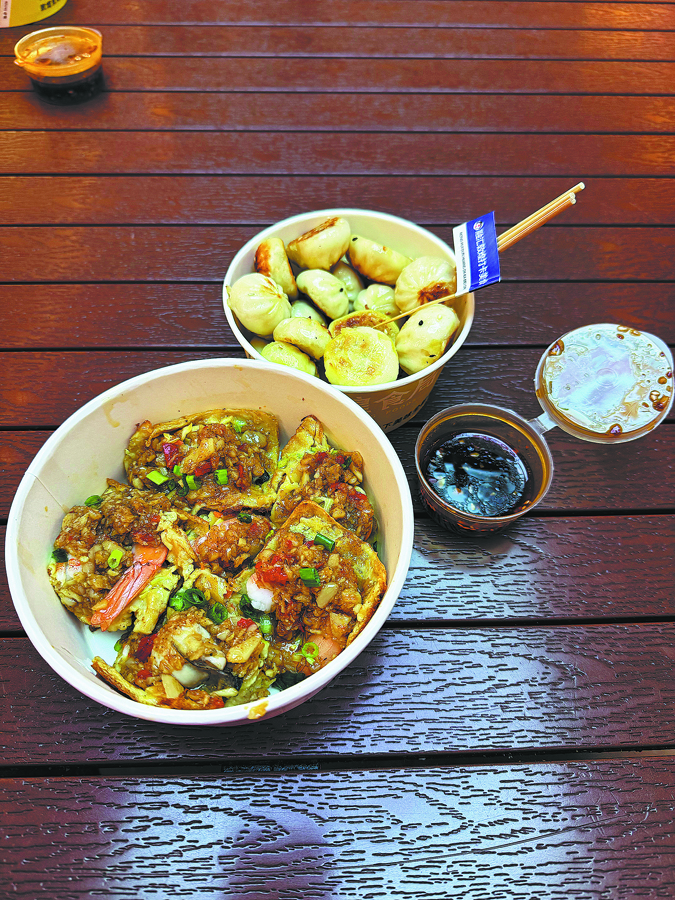
Local delicacies are abundant in the Dunhuang Night Market. [Photo by Kara Schroeder/China Daily]
The best aspect of visiting the Dunhuang Night Market is the abundance of cultural heritage gifts you can find, many of which are made by artisans on-site. As the heart of the ancient Silk Road, shopping is almost like stepping back in time when merchants came to the city to exchange commodities.
Paintings
You'll find stalls and gift shops featuring replica paintings of the stories and motifs found in the Mogao Caves.
Wood carvings
Artisans sit at their stalls, carving Dunhuang landscapes and Buddhas on round or rectangular wood pieces.
Scarves
Vendors sell silk and cashmere scarves with Mogao Cave motifs. The scarves are versatile as they are usually made with different colors on each side.
Snacks
Several shops sell local snacks, usually made with yak milk or dried yak meat. These are tasty treats that your family or colleagues will love.
Keychains and magnets
Wanting something smaller to carry your Dunhuang memories home? A keychain or a fridge magnet makes a wonderful gift for you.
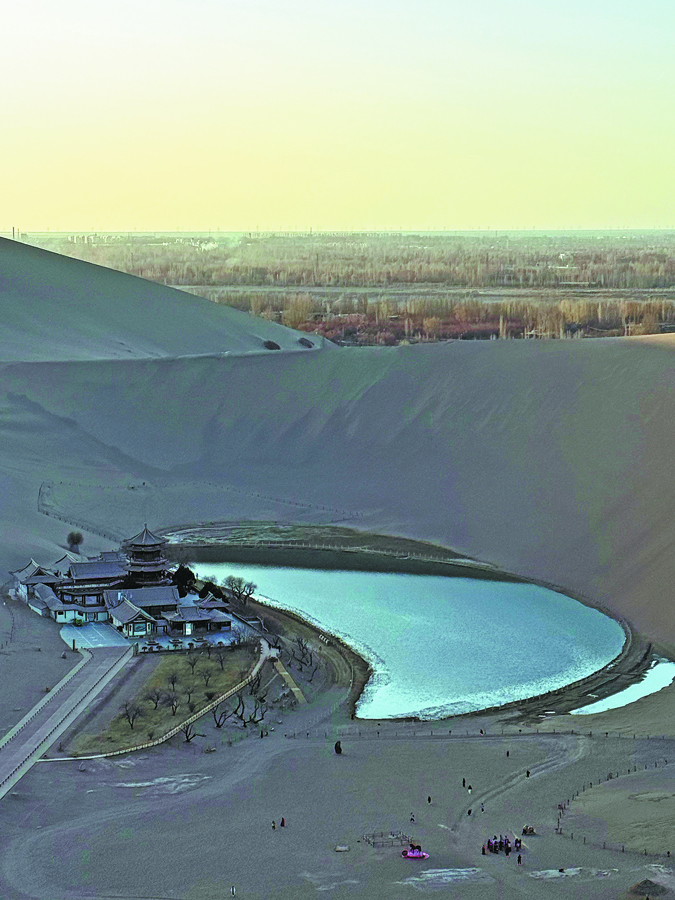
A view of the Mingsha Crescent Lake from the top of the sand dunes. [Photo by Kara Schroeder/China Daily]
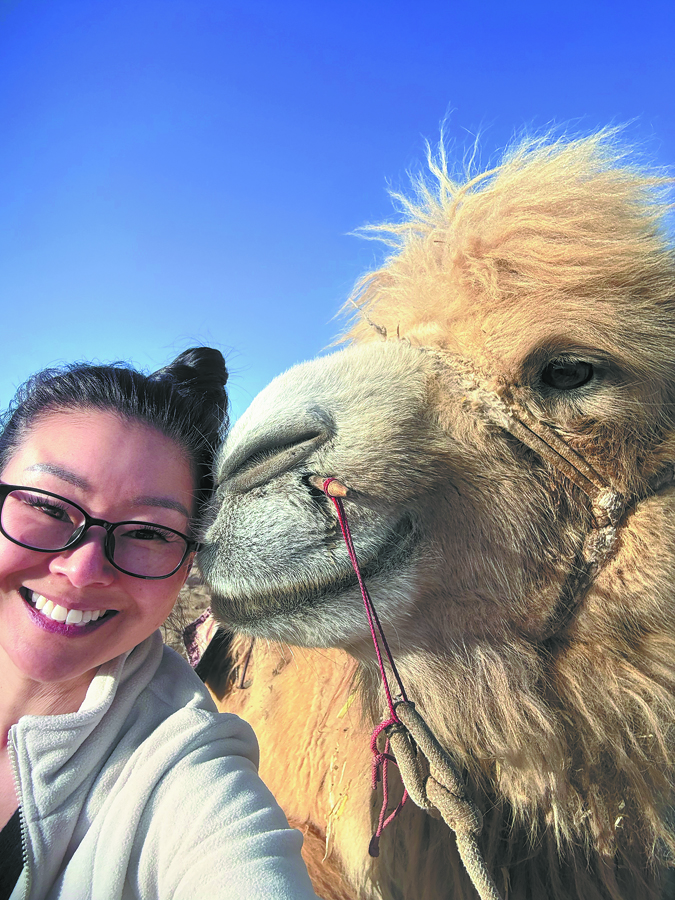
China Daily reporter Kara Schroeder, who named her camel "Spitz", gets a kiss at the end of the ride. [Photo by Kara Schroeder/China Daily]
 Editor:Cai Xiaohui

